
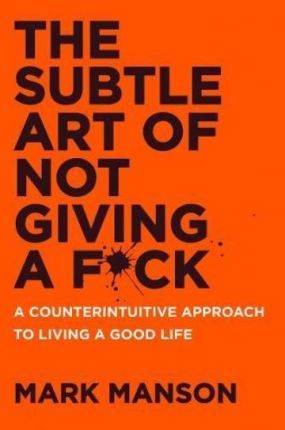
We should care less about most things and spend our F*CK’s on things that truly matter.
Two Key Take Away
- Stop caring about what others think. Care about what you value.
- Suffering is important, make sure you are suffering for something that is worth it.
Chapter 1 – Don’t Try
Main Point
Everyone will die one day, so it is about focusing on what is important and what are your values. To ignore the irrelevant.
Summary
Charles Bukowski – Was a failed author. He drunk, gambled, was a lousy cheapskate. He wanted to be a writer but got turned down by everyone. Eventually after years of trying he got a deal and went on to sell over 2 million copies. He didn’t try to be a better version of himself. He accepted who he was and wrote about that. He didn’t give a fuck about success. He ignored the mantras of looking for more success. Which only reinforces you are not currently successful. He ignored needing more. Care about what is true, immediate, and important.
The Feedback Loop from Hell – We get sad thinking we are sad. We get angry at ourselves for getting angry at something else. We compare our lives to people on social media and think we are even worse off and we think what’s wrong with me? It is a negative experience to think of all of the positive things you want. But the reverse is true, it is a backwards law. Pursuing the negative creates positive outcomes. The pain in the gym. Overcoming shyness to ask that person out.
The Subtle Art of Not Giving a Fuck – It is not indifference to everything, you would be a sociopath. There are three ‘subtleties’.
- Subtlety #1 – Not giving a fuck does not mean indifference; it means being comfortable with being different.
People who are indifferent are usually hiding fear. There is no such thing as not giving a fuck about. As humans was must give a fuck about something. Reserve your fucks for what truly matter. Don’t give a fuck about adversity, failure,
- Subtlety #2 – To not give a fuck about adversity, you must first give a fuck about something more important than adversity.
If you give fucks to silly things, the chances are you don’t actually have anything meaningful in your life to give fucks about. So you create issues to give a fuck about.
- Subtlety #3 – Whether you realise it or not, you are choosing what to give a fuck about.
Maturity is being more selective about what you give a fuck about. Kids are idiots and give a fuck about everything and anything. But those things don’t really matter and we learn that as we grow.
So Mark, What the Fuck is the Point of this Book Anyway? – To make it ok to have things suck sometimes. We start to blame ourselves for failing when we aren’t happy all the time. Suffering is inevitable. The sooner you get better at dealing with the stronger you will be.
Key Quotes
The key to a good life is not giving a fuck about more, it’s giving a fuck about less – pg 5
Our crisis is no longer material; it’s existential – pg 8
Everything worthwhile in life is won through surmounting the associated negative experience – pg 11
To not give a fuck is to stare down life’s most terrifying and difficult challenges and still take action – pg 12
Chapter 2 – Happiness is The Problem
Main Point
We think happiness is the goal. Happiness is the outcome of solving some problem. When we ignore the problem and only focus on happiness we fail to achieve happiness and we feel sad. Focus on solutions.
Summary
The Prince that would be Buddha – There is a story of a King who wanted to give his son a life free of suffering. He kept him in the palace and had servants take care of every need. The Prince wasn’t happy. He snuck out and saw life out side the palace and decided to live a life of suffering. He did this an it gave him no enlightenment either. He then sat under a tree for 49 days and came to the realisation that life is suffering, but not all suffering is equal. We should let go of trying to resist the pain and suffering of the world.
The Misadventures of Disappointment Panda – A superhero with the power to tell you the truths you refuse to hear. Suffering is useful, life is full of pain but it’s the pain that teaches us what to pay attention too. Life will always have problems, just hope they are good problems.
Happiness Comes from Solving Problems – You will always have problems. You just hope they are problems you like. You solve the problem of finding a partner. Now you have new problems of working on the relationship etc. You are happy when you are solving problems. If you ignore problems you are going to feel miserable If you can’t solve the problem, you also feel miserable. Therefore, happiness is an activity, not something that happens to you. Happiness is a constant work in progress. Solve some problems, be happy. Then more problems will arise.
Many people don’t solve their problems. They do one of two things
- Denial – they deny reality. The problem doesn’t exist. They delude themselves with the short term fix which creates a long term insecurity, neuroticism, and emotional repression.
- Victim Mentality – They blame others for their problem and think there is nothing they can do. This is a short term solution that leads to long term anger, helplessness, and despair.
People deny or blame others because it feels good. This high makes you continue doing it and then you get addicted to the high. The longer this last the harder the come down.
Emotions are Overrated – They are just a feedback loop. They try to nudge us in one direction or another. The pain of your hand touching the hot element serves a purpose. People that repress their emotions. You need the feedback of emotions so they struggle to be happy. On the other side to be overwhelmed by your emotions causes us to act like a 3 year old. There is a happy balance. Not all negative feels are bad for you, not all positive feelings are good for you. There is the idea of the ‘hedonic treadmill’ you want something because you think it will make you happy, but you get it, it makes you happy for a little but, you don’t change, you want the new thing, you are unhappy now because you don’t have the new thing. The treadmill continues.
Choose your Struggle – What can you endure. You want to be a pro athlete, then you have to practice, practice, practice. We all want the success, but the question is what pain are you willing to take. Our struggles, determine our successes – pg 39
Chapter 3 – You Are Not Special
Main Point
We get in trouble when we think our problems are unique and only apply to us. We also get in trouble when we think that we are so amazingly special that we should be treated differently. We are all, more or less the same. Unique, not special.
Summary
Self-Worth? – There was a big self-esteem movement in the 1960’s. People with high self-esteem did better on tests and were successful so they theory was if we boost everyone’s self-esteem we would have a healthier, happier population. People were told they were special without earning anything. No hard work, just tell yourself how great you are. This has lead to delusional people who are looking for the high of feeling good. The issue is you don’t feel good unless you have a reason to feel good. So they chase the high of fake praise or they ignore the evidence that they are not actually special. It builds entitlement. The thought that you should have success without working for it. High self-worth isn’t about how positive you are about yourself, it is about how you feel about your negative traits. Yes I eat to much bad food or I don’t work out enough, and then go and do something about it.
Things Fall Apart – Bad shit happens in our lives. However, your problem is not a personal problem. If you are having it as a problem then it’s happened to someone else before, and someone else is going through it right now. It might be specifically different, but in general it’s the same thing. This doesn’t diminish the challenges you face or the pain it’s causing you but it doesn’t make you special. Thinking that it’s your own special form of pain is another element of entitlement, if can play out in two ways
- I am awesome and everyone else sucks so I deserve special treatment
- I suck and the rest of you are awesome so I deserve special treatment
They sound the same but they both are selfish as they make everything about you. Coming to terms with the idea that your pain is not special is the first step to solving them.
The Tyranny of Exceptionalism – Most of us are average. We might be good at one or two things but the effort and time required to be great at anything is very hard. However, with technology and media we see the exceptional all the time. The best athletes, the best looking people, the richest, and we compare ourselves to these outliers. This leads to insecurities and behaves to try to over come the insecurities.
B-b-b-but, If I’m Not Going to Be Special or Extraordinary, what’s the point? – People don’t want to be average so if they can’t be amazing they want to be the victim. They don’t want to accept being average because they think if they accept it, they will never do anything exceptional, so they won’t improve, and their lives won’t matter. This is dangerous thinking. If you think that your life doesn’t matter unless you do something great then you are saying that most of humanity sucks and have no reason to exist. The few people that do get great do so because they don’t think they are great. They obsess about improvement. They improve because they believe they are not great. It is anti-entitlement. They get great because they know they are average and that they could be so much better.
Key Quotes
Technology has solved old economic problems by giving us new psychological problems – pg 60
And the knowledge and acceptance of your own mundane existence will actually free you to accomplish what you truly wish to accomplish, without judgement or lofty expectations – pg 62
Chapter 4 – The Value of Suffering
Main Point
Suffering isn’t bad in of itself, the question is what are you suffering for? Is it for something that you want, that is bigger than you, that provides you purpose and joy, then its great. Is it for nothing of importance, then it is the worst thing in the world.
Summary
Hiroo Onoda – Second Lieutenant Onoda was told to never surrender during WW2. He continued fighting for over 25 years after the war ended in his little island in the Philippines. In 1972 Norio Suzuki decided to go and find him. He found him in 4 days. Onoda choose his suffering. He know why he was doing what he was doing. It is impossible to stop suffering, the question is not to ask how do I stop suffering, but, making sure you are suffering for the right thing.
The Self-Awareness Onion – The first layer is to understand your emotions, when this happens I feel happy/sad. The second layer is to ask why you feel those emotions. Why do you feel happy or sad when these things happen. The third layer is understanding our personal values. Why do I consider this a success or failure. Values are the bedrock of everything we do. If our values are unhelpful, if how we define success and failure is a bad metric, our thoughts and feelings will be out of wack.
Rock Star Problems – Some values lead to metrics which are good problems and can be solved, other values lead to lead to bad metrics which are hard to solve. Dave Mustaine was kicked out of a band just before they started recording their first album. He set about to become the best musician he could be and make the former band mates eat their words. He went on to form Megadeath and sold over 25 million albums, the band that kicked him out turned out to be Metallica and sold over 180 million albums. Mustaine has been sad his whole life because his metric for success is be better than Metallica. All of the money, awards, fame, doesn’t mean anything because he didn’t achieve his goal. Pete Best suffered the same fate, getting kicked out of the Beatles just before their first album. He endured some tough times but later said that he his happier now than if he was in the Beatles because he met his wife and has amazing kids. His metric of success was not be better than the Beatles.
Shitty Values – If you have the wrong values then you set yourself up for failure
- Pleasure – It is a false god. It is fun to do but is superficial. It does not cause happiness but is a by-product of it.
- Material Success – After a certain amount of money, more stuff doesn’t make you happier. It also can distract you from other values.
- Always Being Right – We want to feel right. But we are imperfect and the curiosity and searching is more rewarding that trying to be right.
- Staying Positive – Shitty things in life happen and if you deny these feelings you miss out on lots of feedback. Feeling bad isn’t the problem, it’s what you do afterwards.
These things are all outcome of having good values, not the values themselves.
Defining Good and Bad Values – Good values are based in reality, socially constructive, and immediate and controllable. These are values such as honest, innovation, vulnerability, standing up for oneself and others, curiosity. Bad values are superstitious, socially destructive, and not immediate or controllable. Examples of bad values are dominance through violence or manipulation, needing to feel good all the time, emotionless sex, not being alone, needing to be the center of attention. Good values are achieved internally, bad value rely on the external.
Key Quotes
Our values determine the nature of our problems, and the nature of our problems determine the quality of our lives – pg 71
We get to control what our problems means based on how we choose to think them. the standard by which we choose to measure them – 75
The question is not whether we evaluate ourselves against others; rather, the question is by what standard do we measure ourselves? – pg 77
When you give better fucks, you get better problems. And when you get better problems, you get a better life – pg 89
Chapter 5 – You are always choosing
Main Point
It is not your fault what has happened to you (well not all the time) but it is on you to choose how you move forward.
Summary
Choice – Being forced to run a marathon versus training for a marathon and giving it a go is the same pain, the same problem, but one is being forced upon you, the other you are choosing to do. We feel empowered when we choose our problems. The Choice – William James had a very difficult life, he had health problems, nearly dying multiple times. His father thought of his as a fail for dropping out of Harvard Medical School and being unemployed in his 30s. While contemplating suicide, he was reading philospher Charles Peirce. James decided to run an experiment on himself. He would spend one year believing that he was 100% responsible for everything that happened to him. Then he would do everything in his power to change his circumstances. James went on to become the father of American Psychology. Like the stoics, we don’t always control what happens to us, but we always control how we interpret what happens to us and how we respond. We are choosing the values and metrics by how we measure everything.
The Responsibility/Fault Fallacy – People often confuse these two terms. They think they are the same. The difference is fault is past tense and responsibility is present tense. Fault happens from choices that have been made, and responsibility from choices you are currently making. You might be able to blame people for your situation but they are not responsible for it. We love to take responsibilities for our success but taking responsibilities for our problems is even more important. It is where the learning happens.
Responding to Tragedy – There are many truly awful things that happen in life. These are not your fault. However, you are responsibly for how you deal with them. Do you use that pain for good? We choose our problems.
Genetics and the Hand We Are Dealt – Yes, in poker it can be easier to win a hand if you get dealt the best cards, but it doesn’t guarantee that you will win. Everyone faces some trauma or tragedy in their lives.
Victimhood Chic – It is cool to be the victim now. It feels good. You get high on your own self-righteousness. But it sucks attention away from the actual victims. You make it about you. We should be promoting values of honesty, transparency, discussion rather than wanting to be right and feel good.
There Is No “How” – These is no guide for it, you just make a choice. You choose different values. It is that simple, but it’s not easy. Everything will feel wrong. Your metrics for success are all different. You relationships will change because they were built on other values. It is normal to feel like it is all strange and uncomfortable. This is a painful side effect of putting your fucks somewhere else.
Key Quotes
If you feel miserable in your current situation, chances are it’s because you feel like some part of it is outside your control – that there’s a problem you have no ability to solve, a problem that was somehow thrust upon you without your choosing – pg 92
We are responsible for experiences that aren’t our fault all the time. This is part of life – pg 99
Outrage is like a lot of other things that feel good but over time devour us from the inside out. And it’s even more insidious than most vices because we don’t even consciously acknowledge that it’s a pleasure – Tim Kreider (New York Times op-ed) – pg 113
Chapter 6 – You’re Wrong About Everything (But So Am I)
Main Point
We are often wrong, this is not a problem. It is the start of learning and growth. To think you are never wrong leaves no room for change or growth.
Summary
Are you certain – We all get things wrong. Over and over we make mistakes. This is not a problem. It is part of growing. Growth is an iterative process – pg 119. We don’t go from wrong to right. We go from wrong to slightly less wrong. Our feelings in the moment might be positive but years later we look at them as negative. We never know what is right, and what is right changes with time and context.
Architects of Our Own Belief – Our brains are always searching for meaning. We connect ideas and actions which can be totally (and usually is) incorrect. The two problems is that the brain is imperfect, the information it takes in to make its decisions isn’t accurate. Secondly, when we make that meaning we want to be provided correct. Cognitive dissonance happens where we ignore all the evidence to prove our belief wrong. Be Careful What You Believe – Journalist Meredith Maran, through the help of a therapist unlocked memories of hidden trauma, her father had sexually harassed her. She told the family and it tore it part. Years later she had another realisation, her father didn’t abuse her, she had a false memory. Our brains are just trying to make things make sense. It want to keep things consistent when what we believe, what we experience, and what is happening right now. We tell stories and make bits up in it for it to be a better story then we swear that its the truth. Trust your gut less.
The Dangers of Pure Certainty – Psychologist Roy Baumeister researched Evil, the common thought was that people did bad things because they had low self-esteem. The opposite is usually true. They are super righteous about themselves and their own beliefs. The racist person thinks they are genetically superior so they are doing nothing wrong. We want to be certain because it feels safe, but growth happens within uncertainty. We must be open to the possibility of being wrong for growth to exist.
Manson’s Law of Avoidance – The more something threatens your identity, the more you will avoid it. We have values and ideas of ourselves, we try to justify and live up to those ideas. We bias our actions to what we already know. Having an open idea rather than a closed idea of who you are can keep you striving and discovering.
Kill Yourself – Buddhism says that the idea of ‘you’ is a arbitrary mental construct. Give up the idea that ‘you’ exist. We we stop telling ourselves the stories of ourselves we are free to act and grow. When you feel that your problems should be treated differently then you are being narcistic. Redefine your measure of yourself to a broad term rather than a specific one.
How to Be a Little Less Certain of Yourself – Questioning your thoughts and beliefs is a powerful skill to grow. Here are some questions to help you question yourself
- It is possible that I am wrong? – You might be wrong so might as well ask yourself that from the start. It doesn’t make yourself wrong just be asking it. But being critical of yourself can open up humility and growth.
- If I am wrong, what would it mean? – What does being wrong reveal about yourself and why you hold these beliefs?
- Which causes a bigger problem, being right or being wrong? – You are going to have either outcome, so which one is going to be better long term?
Key Quotes
Certainty is the enemy of growth – pg 121
Chapter 7 – Failure Is the Way Forward
Main Point
Don’t run from the pain and discomfort of potential failure. Only though trying with the potential for failure will you learn and grow. Pain is not to be avoided by sort after.
Summary
Rock Bottom – He entered the job market in the 2007, the worst job market in 80 years. He was already a failure, if by failure you mean having a job that pays the bills out of university then yes he was a failure. Failure is a relative idea. This failure gave him the freedom to try more, what is the worst that could happen?
The Failure/Success Paradox – We don’t know about failure, but we learn it. Maybe at school, maybe elsewhere, but we learn that it is bad to fail. So we stop doing things because the fear of failure becomes so large. But you can only improve on things that you are willing to fail on. Making metrics about external validation gets us in trouble. Get an A on the test, by a car, etc, when we get them there is nothing. Better metrics are internal and process driven, things that you constantly need to keep working on.
Pain Is Part of the Process – In the 1950’s Polish psychologist Kazimierz Dabrowski looked into survivors of WW2. It was particularly brutal in Poland. He found a sizable number found their horrible and traumatic experiences helpful. Often overcoming a huge adversity becomes some of our most meaningful moments. It is important to feel the pain and not cover it up with indulgences. You need to separate what you feel with what is. When changing values it feels bad, it will continue to feel bad. Remember you don’t know anything, so do something anyway.
The “Do Something” Principle – People think you need inspiration to have motivation to do something.
Emotional Inspiration → Motivation → Action
But what really matters is to do something. Doing something will start to solve the issue, or figure out ways that don’t work. So the real equation should be:
Action → Inspiration → Motivation
So the metric is about the process not the outcome. Not write an amazing novel, but write 200 words. Over time. those words become a novel, but only if you do something.
Chapter 8 – The Importance of Saying No
Main Point
Making choices of what you say no to strengthens what you say yes you. Being able to say no is a sign of a healthy relationship.
Summary
Welcome to Russia – Russian society has a bluntness that Western culture lacks. The theory is that under the fear of communist Russia there was little economic opportunity, the most valuable currency was trust. To build trust you have to be honest. In the West, there is lots of economic activity so trust got replaced with salesmanship. People changed who they were depending on who they were in front of.
Rejection Makes Your Life Better – If we say yes to everything then we value nothing. Saying no to things and making choices means the things do you say yes to have more value and meaning to you. We have a craving to avoid rejection, giving or receiving it. This short term high leads to long term issues. Human’s want honesty, so getting comfortable hearing and telling people no makes our relationships stronger and we are emotionally healthier.
Boundaries – Romeo and Juliet was probably a satire of romantic love. It is seen as the ideal of love where these star crossed lovers saw each other, got married, caused a family fight, Juliet pretended to be dead, Romeo thought she was and killed himself, she wakes up to find him dead and kills herself. Not really a romantic tale. We shouldn’t feel obligated to fix our partners. We should choose to be there for them. We can’t be everything for the other person. We need to be there for them regardless of what they care about, that being unconditionally.
How to Build Trust – You must be willing to say and hear no. Conflict is necessary to maintain and grow a healthy relationship. People can say what ever they want but if you don’t trust them then the words are meaningless. If someone breaks your trust then the other person has to own up to issue, not downplay it. They need to get to the root of their decision and then show actions over time to remedy it.
Freedom Through Commitment – At the start of life you want to try as many things out as possible. You want to learn what you enjoy and what you don’t. Consumer society makes us feel like we want more. It has created the paradox of choice. We think we want a million options but choosing between three is actually better. With lots of options we take forever to come to a decision for fear of making the wrong one. Committing to one person, one place, one industry is the same as saying no to everything else. It gives you freedom and liberation to explore that one things deeply.
Chapter 9 – …And Then You Die
Main Point
We do what we do because we want to be immortal, we want our names to carry on after we die.
Summary
It Will End – Death gives life meaning. Without it, everything would be meaningless. The fact that it will end and when it does it will mean nothing doesn’t mean we shouldn’t do anything, it means there is no reason not to do anything. Go out there and live, death is coming.
Something Beyond Ourselves – Academic Ernest Becker, never found a place for himself, getting fired from multiple universities. He would get colon cancer and die in 1974. On his death bed he wrote The Denial of Death which would go on to win the Pulitzer Prize. The book he two main points
- Humans are unique in that we can think about ourselves abstractly. We can imagine ourselves in different scenarios, think back and forward in time, and we eventually become aware of our own mortality.
- We have two selves, a physical self and a conceptual self. The physical self is the one that runs around, eats, sleeps, etc. The conceptual elf is our identity and how we see ourselves.
Becker’s argument is that we are aware that our physical self will die at some point, but we want our conceptual self to live for ever. Putting our names on buildings, books, to our kids. He called this our “immortality project”. Becker thought the “immortality project” he caused all the wars, religions, sports, art, and technology. Our desire for our conceptual self to live forever. Our immortality projects are our values. However, these values are the problem, not the solution. Instead of trying to create this eternal name we should question our conceptual self and our fear of death. Becker called this the ‘bitter antidote”. We should come to terms with our own death so we can create better values rather than immortality.
The Sunny Side of Death – How will the world be any different, good or bad, when you are gone? It is really the main question to ask yourself. Most religions and creeds talk about happiness is being part of something bigger than ourselves. Not that we are central too. We live in a ‘me first’ society where it makes us think that we are important. That only greatness is worthwhile, but you are already great. Go live your life, you are alive.
Interested in supporting my page by purchasing this book, click here
 Luke McMeeken-Ruscoe