
There is a concept called Team of Teams. It is pretty simple. In our modern work environment, we have many people with different skill sets. These people might not interact with each other because they are on different teams.
To get the benefit of these skill sets, for specific projects, you make a new team. This allows the team to benefit from having a vast range of skills and the people benefit because they get to know other team members that they don’t work with on a daily basis.
It sounds simple but there are lots of steps you need to do to make it work, one work environment I saw did not use it well.
Get Fat
Fish oil contains two omega-3 fatty acids, docosahexaenoic acid (DHA) and eicosapentaenoic acid (EPA). We often consume them through fatty fish like salmon and some shellfish like oysters.
There is a lot of evidence for the beneficial effect of DHA in humans. It is anti-inflammatory and has been shown to help with heart disease, high blood pressure, and arthritis.
Another considerable benefit is for brain health. It may slow or prevent Alzheimer’s disease.
Follow the Process
The trick to the Team of Teams concept is that you need to think about the project and ask a lot of questions before you start.
- What skills do you need for it to be successful?
- What skills do we have in the team?
- Is this a project that needs to be done well?
- Is this a project where we will have people teach others skills?
You can’t just throw random team members together and think it will work, but that is what they did.
Every Step Matters
DHA is very important for the body, however, our body doesn’t just get DHA, our body takes precursors and upregulates them into different compounds. for DHA it looks like this.
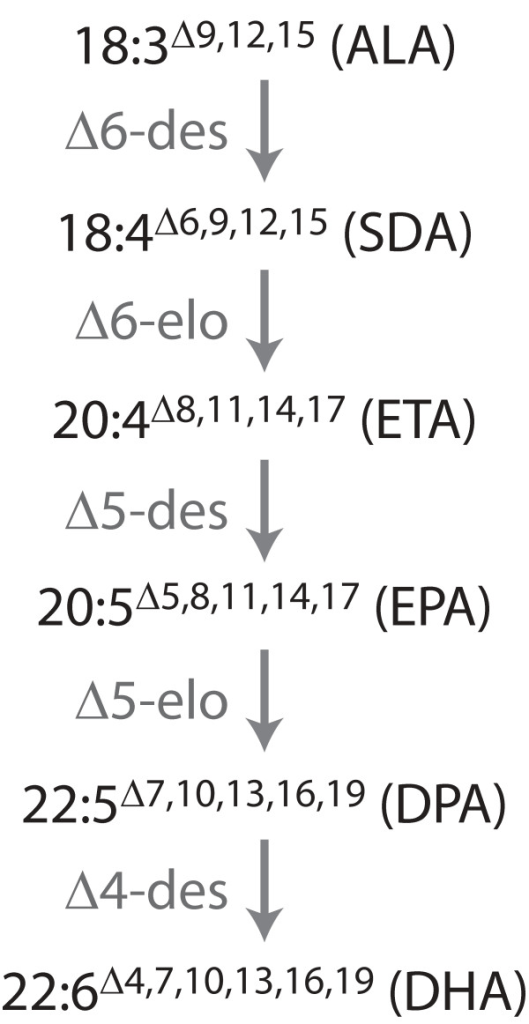
Every step matters. Each of the compounds serves a purpose and a function. They are all important for our health, not just the final step.
Don’t Skip To The End
The team I worked with just thought that throwing anyone together was going to make a better work environment. What happened is that they put people in positions to fail, they didn’t understand the individual’s skill sets or how they can combine complementary skills.
Most of the groups became despondent as team members were uninterested and didn’t put in any effort. Managers didn’t know what they wanted from the exercise. Everything fell apart and people started to dislike their team members, which is the opposite of what they wanted to have happen, all because they tried to skip to the end.
The Take-Away
Many people want to skip to the end, but by doing so you miss out on the process that creates the value.
I am the first to try to cut out unneeded steps and I want to make things as simple as possible, but once you find your process the goal is to engage with each step to get the most out of the whole thing, not just to jump to the end.
The cliche is that the journey is more important than the destination, and in this case it usually is.
 Luke McMeeken-Ruscoe