
Two of the modern architectural marvels of the 20th century are The Sydney Opera House and the Bilbao Guggenheim.
There are many similarities between the two structures, both challenging and interesting designs resting at the edge of the waterfront. Striking icons for their cities.
The success of their completion might have been similar but the process behind their creation differs widely and can help you plan and execute better projects.
The Sydney Opera House

In 1957, an unknown Danish architect Jørn Utzon was selected as the winning design for the brand new opera house in Sydeny.
Behind the scenes, there were many government officials wanting to get their name on the project or derail the project. This meant that the foundation stone was laid before Utzon had figured out the structural basis of the building.
Utzon had a radical design but no technical plan on how to achieve it. It was considered unbuildable and another Dane, engineer Sir Ove Arup was brought on board to figure out how to construct the now iconic concrete roof sails.
Workers were digging before Utzon and Arup had made plans on how they were going to achieve the designs.
They created 12 trial schemes before finding a solution to the problem.
Utzon liked to experiment and feel his way through his projects. This had worked for him on his own home which is by all accounts beautiful, but this project was much bigger and had many more moving parts.
Another issue is that Utzon wanted to make the final decision on every design and change. This created a huge bottleneck as he would leave for weeks at a time. He wasn’t based in Sydney.
All decisions stopped when he wasn’t here.
Nine years into the build, Utzon was on the outs with the despite some confusion it was announced by the state assembly that he had resigned from the project.
A young government architect, Peter Hall was brought in to finish the Opera House. The project went 15 times over the original budget and was over 10 years delayed.
Utzon’s name was never on the building.
The Bilbao Guggenheim
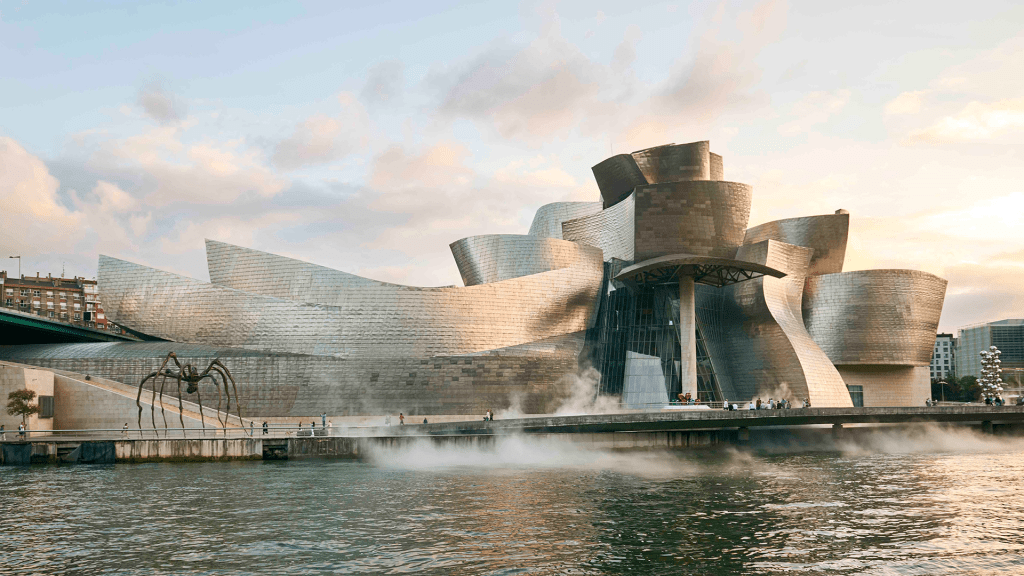
Frank Gehry was much older than Utzon and was battle-weary from many different and challenging projects.
He was shown an old warehouse in Bilbao and was asked if he could renovate it to become a new Guggenheim Museum.
Why? asked Gehry, what are you trying to achieve?
This key question of why was never asked in Sydney, or anywhere close to being answered. Bilboa knew what they wanted, they wanted an Icon.
Sydney had lucked into it, Bilbao wanted to design it. Bilboa was hit hard by de-industrialization and the local government wanted the new building to put Bilboa back on the map just as Sydney Opera House had put Sydney on the map
Gehry said Fine, then forget about the renovation project, you will need to build something breathtaking and new and build it on the waterfront. He also added that he knew the spot.
The building was completed on time and under budget.
Building Better Projects
Both projects are marvels and have been studied and seen by millions of people.
What we can learn from this isn’t that the young person has no discipline and the older experienced person makes better decisions.
It is that the first question of what are you trying to achieve is profoundly important and fundamental to every decision moving forward.
Added to that is the cohesion of everyone in the project. Being on the same page and working towards the same goal.
In Sydney, they were already building while the project was still in the experimenting and refining phase. They were wasting time, energy, and money by working on areas that hadn’t been thought about.
Also, the powers that be all had different agendas and ideas, creating division at the top.
In contrast, Bilboa was thought about and clear. Everyone was on the same page with the same goal.
And one of the most power questions is just simply to ask why.
The idea for this was inspired by hearing about the history of the Sydney Opera House in the podcast Cautionary Tales with Time Harford
Newsletter
Thanks for Reading. If you want more ideas about strategy and leadership every week, enter your email below and join the team.
 Luke McMeeken-Ruscoe