
Brain power should be used on what to do, not how to do things.
If every part of your business has different ways to do things then staff spend less time of solving problems and more time thinking about which process to follow.
Tag Archives: Performance
Don’t Skip The Process
Understand the outcome is fine, it shows where we want to go.
The process we follow is how we get there.
If you skip steps and try to just get to the outcome you often miss out of the things that will make the outcome worthwhile.
Don’t Play Their Game
Simplicity is difficult. It is painful to cut things out, to remove things that might be helpful.
Complexity appears intelligent but it is a crutch to not have to be specific about what you are doing.
Planning for the futre
Strategy is about what you think will happen in the future. Planning is about using resources in the present. If you spend all your time planning, you won’t have any future.
Start Digging
Inspiration doesn’t happen with meticulously designed perfect plans.
It happens when you have a rough to good idea of where you are trying to go and you have to improvise some of the way.
Thinking Better
Short cuts to get rid of boring work so you can spend more time thinking about interesting things, spending time with people you love.
Thinking Better – The Art of the Shortcut – By Marcus Du Sautoy
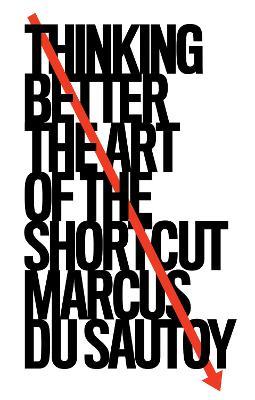
Du Sautoy delves into the past to show how some of the great minds of mathematics solved problems and how their thought process can help you solve yours.
Imperfect
We want to let go of the idea of perfection. Nothing is going to be perfect. Everything is always in a state of flux.
You get out of life what you put in it, the process is important.
Rest Those Weary Bones
Stress is part of the improvement process. You need to work out to get stronger, you need to study to learn.
The problem is not enough rest to allow the stress to make you better.
Exhaustion is not too much stress, but too little rest.
Detecting Ideas Better
Thinking deeply on a problem that creates little value is a waste of time.
Thinking narrow on a problem that needs room to run is pointless.
Thinking wide and thinking deep are great strategies, but only when deployed correctly.
 Luke McMeeken-Ruscoe