A great idea is worthless if you can’t get the team to do it.
Instead of trying to do the whole thing, can you implement smaller pieces of it to show your skill and credibility to gain traction to implement more?
Your might be right, but ar

Trying to make the complicated simple with strategy, leadership, performance, and story telling
A great idea is worthless if you can’t get the team to do it.
Instead of trying to do the whole thing, can you implement smaller pieces of it to show your skill and credibility to gain traction to implement more?
Your might be right, but ar
The trouble maker in your team isn’t in opposition with you, they don’t believe in your core assumptions.
Assumptions aren’t facts and shouldn’t be a threat to your identity.
What if the trouble maker is right?
Culture is ongoing, implicit, and pervasive.
If you don’t guide it where you want it to go it will go where it wants.
Express your values, live up to those values. Ask your team what they think the values are.
Understand the outcome is fine, it shows where we want to go.
The process we follow is how we get there.
If you skip steps and try to just get to the outcome you often miss out of the things that will make the outcome worthwhile.
Inspiration doesn’t happen with meticulously designed perfect plans.
It happens when you have a rough to good idea of where you are trying to go and you have to improvise some of the way.
Short cuts to get rid of boring work so you can spend more time thinking about interesting things, spending time with people you love.
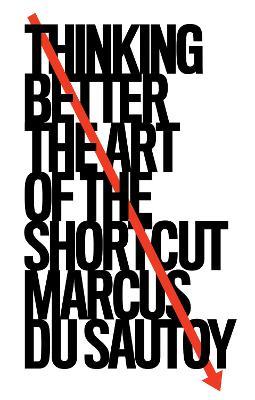
Du Sautoy delves into the past to show how some of the great minds of mathematics solved problems and how their thought process can help you solve yours.
Stress is part of the improvement process. You need to work out to get stronger, you need to study to learn.
The problem is not enough rest to allow the stress to make you better.
Exhaustion is not too much stress, but too little rest.
Tradition is defaulting to other people’s decisions.
If you don’t know their assumptions or constraints and you think it can be done better than there is a place for you to be clear with yours and try.
Thinking deeply on a problem that creates little value is a waste of time.
Thinking narrow on a problem that needs room to run is pointless.
Thinking wide and thinking deep are great strategies, but only when deployed correctly.

 Luke McMeeken-Ruscoe