
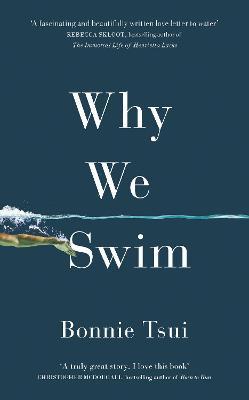
Quick Review
We came from the water and in the water, there are many positive experiences we can still have. There are artefacts from thousands of years showing human hunting and interaction on and in the water, yet we have thousands of deaths a year from drowning because we have lost a connection with water.
The water can help heal us, both physically and mentally. It can provide a meditative space as well as a potentially life or death situation. We have to learn to feel the flow and go with the water, using it to help us rather than fighting it.
Two Key Take Away To Help Me
- Swimming, especially in cold water is helpful in physical and mental performance. It can help heal and prepare you for difficult situations.
- Being in the water not only creates a potential life or death situation which helps us focus on being present, but it also provides a chance to remove senses and mediate.
Chapter 1 – Survival
Main Point
We all come from the sea but we have adapted to land. Why is it that we keep going back into the water? Survival is the obvious answer. To get away from predators and to find food in the ocean and rivers.
Summary
March 11, 1984, a boat sinks in the North Atlantic. The only survivor is Guolaugur Frioporrson, he ended up swimming over 3 and a half miles in the freezing ocean to get to land. When the doctor got to him they couldn’t feel a pulse. He had 14mm of fat on him, 2 to 3 times the normal human. This kept him warm and buoyant and able to keep swimming. He was more marine mammal than a land mammal.
Chapter 2 – Stone Age Swimming
Main Point
We have lived and hunted in and on the water for thousands of years.
Summary
Abalone – hunting for abalone kills people everywhere. We are disconnected from our food sources now.
Green Sahara – The first recorded images of humans swimming is from a cave near the Egypt border. Known as the Cave of Swimmers. It was discovered in 1933 by Laszlo Almasy, at the time, people didn’t believe that there could be any water in the barren dry Sahara. in 2000, Paul Sereno confirmed Almasy’s hunch by finding a burial area they called Gobero.
Gobero – The people of Gobero potentially had boats, they had fishing hooks, nets, and they hunted in and on the water. There were two distinct groups of people that lived a thousand years apart. The area had many interconnected lakes. They all lived near the shore.
Using the Sea – in 2008, scientists found axes that were hundreds of thousands of years old. Because Crete was separated from the mainland it meant they had to be seafaring. British Anthropologist Chris Stringer and his team found Neanderthal remains showing they were eating shellfish, dolphins, and seals 26,000 years ago.
Chapter 3 – You’re A Land Animal
Main Point
We came from fish but adapted to life on land. We learn about our environment from others, if they swim, we can too.
Summary
We Evolved from Fish – But we are now secondary swimmers. We evolved away from swimming and into swinging through trees. We still have traces of those fish in us. If you put a young baby face down in water they hold their breath and their heart rate slows to conserve oxygen. They won’t start swimming though. Every mammal can swim from birth, but not the apes.
We are Imitation Machines – We learn from observing and interacting with others. We are a cultural species while other animals are social learners. Evolutionary Biologist Joseph Henrich calls case studies of exploring getting lost or marooned in some new, inhospitable environment the “Lost European Explorer Files”. All of the people that survived connected with the locals who were thriving this so-called challenging environment.
Key Quotes
The key to understanding how humans evolved and why we are so different from other animals is to recognize we are a cultural species – Joseph Henrich – PG 26
Chapter 4 – Lessons From A Nomad Sea
Main Point
We can adapt to the water. Different cultures have learnt to live with the water.
Summary
Bajau and Moken – Two aquatic nomadic cultures in Southeast Asia. The Bajau have spleens twice the size of the land living neighbours. The spleen pumps oxygen-rich blood into the bloodstream when you dive. The Moken have better vision in the water than non-Moken. When the Boxing Day Tsunami happened in Indonesia in 2004, the Moken saw the signs and all went either up as high as they could or if they were on the water out to deeper water. Many people lost their lives because they didn’t listen to their warnings. They had oral traditions about what to look out for even if they had, themselves, never seen a tsunami.
The Dutch – They make every child pass a swimming test in their clothes and shoes. They acknowledge that they have to live with the water, not to keep it away from them. Ahmed Aboutaleb, the Mayor of Rotterdam said if they have a huge flood they can only get out 15% of their population. “We have no choice. We have to live with the water.”
Chapter 5 – The Human Seal
Main Point
There is an event named in honour and in recognition of Guolaugur Frioporrson.
Summary
Iceland – Guolaugur Frioporrson comes from the island of Heimaey. It has one of the most important ports in Iceland. The town was nearly destroyed by a lava flow in the 73. The cold and volcanic environment have made the Icelandic people into a hardy and resilient people and Guolaugur become and face of that. They have records of drownings going back to 1251. They pioneered boating safety equipment. In 1891 they started having swimming lessons in the harbour. 2003 is a proud year because no one drowned.
Guolaugssund – It is a yearly event of swimming 6kms to remember Guolaugur’s feat and to remember those that didn’t make it back.
Survival – Guolaugur’s story is about survival, and about keeping to his word. All of the people on the overturned boat that night made a pact that if somehow someone survived they would tell the story and make sure that the boats had self deploying safety boats. His survival made swimming safety even more meaningful.
Community – the Guolaugssund is just 240 lengths of the pool, but it binds the community together. It is bigger and more poignant than 30 people swimming in a pool.
Tradition – The Icelandic pass swimming down as a tradition. As a way to strengthen the bonds of community.
Key Quotes
We swim today, writes (Australian Philosopher Damon) Young, Euphoria “comes from the passions of survival, without the desperate need to survive.” – PG 58
Chapter 6 – Well-Being
Main Point
Swimming is a gentle way to move the body and help heal.
Summary
Kim Chambers – nearly lost her leg in an accident and found swimming as a way to rehabilitate herself. She is now the record holder for many open water swims and is one of the best marathon swimmers in the world.
Chapter 7 – The Water Cure
Main Point
Swimming has many health benefits.
Summary
Water Therapy – Cultures all over the world have used water as a cure-all. When Benjamin Franklin was living in London, he would swim in the Thames every day. Cold seawater was meant to cure many things, so people started going to the seaside, not for the beach, but for the water. There are Japanese, Chinese, Greek, and Roman traditions around using water as therapy. One was the ‘sailors’ method to cure rabies.
Nerve Repair – Chambers has a theory around why the open water swimming helped her. The cold water makes your blood go to protect your vital organs, and when you get out of the water the oxygenated blood takes fresh nutrients to the damaged nerves in her leg.
Benefits – Dr Hirofumi Tanaka has studied swimming and it lowers blood pressure more than running or cycling and it helps arthritis suffers reduce pain and movement restrictions.
The Rock – The swim from Alcatraz was considered impossible until it wasn’t. Now, people do it routinely.
Key Quotes
Renew thyself completely each day; do it again, & again, & forever again – Henry David Thoreau (Walden) – PG 74
But she finds something extraordinary in pushing through the discomfort to see what’s on the other side – PG 76
Chapter 8 – Seawater In Our Views
Main Point
Coldwater is good for health. Swimming in cold water has positive health effects.
Summary
Heat and Cold – The different temperatures do different things to your body, but, they all have positive effects. Heat can lower heart rate and blood pressure and improve relaxation. Cold can increase metabolism and dopamine. It is not all good, the Ama, diving women of Japan and Korea have lower heart rates than non-divers of the village, but they had worse hearing. Diving to such depths does have its problems.
Fat – White fat holds energy, brown fat burns energy and produces heat. We hadn’t found brown fat in humans until 2009. Babies have a lot of brown fat because they don’t have the muscle mass to produce heat. We lose brown fat as we age and it is why old people get cold and start to put on weight. Cold and exercise can help keep your brown fat and change white fat into beige fat.
Chapter 9 – Open Water, Meet Awe
Main Point
Being in the water puts you in a potentially fatal position. Being close to death makes you be present.
Summary
Awe – Stanford Researcher Melanie Rudd found that we are more liked to be relaxed and satisfied with life after we experience awe.
Death – being in the water put life into perspective because you could be on the menu at any time. Drowning is a real possibility.
Breathe – Deep breathing helps relieve anxiety. When we are stressed we take short shallow breaths. Swimming, by the nature of it, requires that we take big deep breaths and then release them slowly.
Chapter 10 – Who Gets To Swim
Main Point
Swimming used to be for everyone, now it is more for the rich.
Summary
Privilege – Public swimming pools were just that, public, anyone could swim in them in the US. It didn’t matter about your colour, sex, or class, then it slowly changed. Racial tensions caused riots at pools. You couldn’t mix sexes. Pools become political battlegrounds. The rich retreated to their private pools and clubs. Now, in the US, black kids are 5 times more likely to drown than white children. With no funding, the public pools feel into disrepair.
Chapter 11 – A Mini United Nations
Main Point
Swimming is a dangerous activity. For many years, men were only taught to swim.
Summary
Swim Teams – These started in England in the early 1800s. They moved out of the seaside culture that had developed previously around swimming and bathing for health and hygiene. It was only males that were taught how to swim until social essayist Harriet Martineau helped changed minds to allow certain days and hours set aside for female swimmers.
Everyone Drowns – Every year 372000 drown a year. Knowing how to swim doesn’t stop you from drowning. There are many factors involved in drownings. Parents whose children get swimming lessons are less observant with them around water.
Chapter 12 – Chaos and Order
Main Point
When you are swimming you can’t tell people’s wealth or status or rank when they have nothing to identify them.
Summary
Basics – Swimming reduces you to just you. You don’t need much to swim so you are exposed but also equal.
Chapter 13 – Competition
Main Point
There are many different ways people compete in the water.
Summary
Survival – The salmon are born freshwater fish but smolts, changing their physiology to breathe saltwater. Then it swims in the ocean for 8 years and returns to the same river and changes again to make it’s journey up the river to spawn and die. We don’t have so much need anymore to change for survival, but we change for competition.
Martial art – Swimming is used as part of a warriors tool kit. Plato said one lacked education if they were ignorant of “either letters or swimming”. Julius Caesar was known to be a good swimmer. Over time swimming became less about fighting or honouring the gods, to personal glory with races and competition.
Chapter 14 – How To Swim Like an Assassin
Main Point
When we swim or perform at a high level, we want to think about fewer things, focusing only on the specific that will affect us.
Summary
Mindlessness – Jim Bauman, sports psychologist for 4 US Olympic swim teams, thinks lots of people talk about mindfulness, being aware and present of what is around you. He thinks you should be aiming for mindlessness. Having everything that can run on autopilot, you want to be concentrating on fewer and fewer things. The training should get the biomechanics to work and you can store away the emotional baggage.
Navy SEALs – Bauman has worked with the SEALs, he is asked why they are so good in challenging situations, he says “What SEALs are good at is being able to find what is relevant in a situation, and they don’t get distracted by all the irrelevant stuff, the noise. They focus on the job, the objective, and that’s it.” PG 174
Chapter 15- Sharks and Minnows
Main Point
The aim of the game is to get better.
Summary
Improvement – All of the swimmers, whether they start when they are young or when they are much older, all start as novices. They improve over time. Doing different drills, and refining techniques. It is all about getting better.
Ego – Sometimes it is hard to be taught something when you get older, you don’t want to be told what to do.
Chapter 16 – The Way Of The Samurai
Main Point
You want to flow, be one with the water.
Summary
War – The Samurai developed techniques to move through the water silently, they could swim in full armour, leap out of the water, and keep their bodies out of the water to shoot arrows.
Flow – the art is known as Nihon eiho. The Japanese also had a relationship to water similar to the British, both being island nations, you needed to swim to survive, but more closely with the water being healing and purifying. The topmost principle is having the mind and water work together. You have to work with the water, you won’t win if you struggle against it. It is a form of Zen meditation.
Chapter 17 – Flow
Main Point
Flow state when you perform optimally.
Summary
Flow – Hungarian psychologist Mihaly Csikszenmihalyi coined the term ‘flow’ to describe “the state in which people are so involved in an activity that nothing else seems to matter.”
Bryon – Lord Bryon had a leg deformity and never felt more alive than when he was swimming. It was swimming the treacherous 4-mile strait, Hellespont, in 1810 that might have unlocked some of his genius.
Chapter 18 – A Religious Exercise
Main Point
Be one with yourself.
Summary
The Power of Now – Swimming means you have to be present.
Zone and Flow – Being in the Zone is defined by psychologist Robert Nideffer as the optimal state of physical performance and Flow as the optimal state of mental performance.
“Default-Mode Network” – When our minds are wandering without any particular task or focus they can enter this state and create interesting and fresh new connections.
Chapter 19 – The Liquid State
Main Point
Finding the calm in the chaos.
Summary
Isolation – The zoid that you enter in the water can help block out all stimulation and put you into a meditative state.
Interested in supporting my page by purchasing this book, click here

